- Goal oriented
- Client centered
- Practical tools
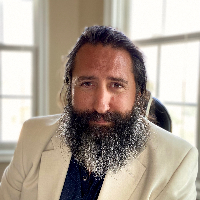
About Randolph
Prof. Randolph (Randy) Beasley is a Licensed Marriage and Family Therapist (LMFT) based in California. He brings five years of clinical experience and a background in ministry and education to his work. Randy focuses on practical progress and clear goals in sessions to help people facing depression, anxiety, relationship strain, addiction, and life changes.
Randy originally studied business and theology before shifting to marriage and family therapy. He completed a Master of Arts in Marriage and Family Therapy from Touro University. Earlier roles included pastoral work, camp direction, and curriculum development, and he has worked in community clinics, substance use treatment settings, a state hospital, and jail environments.
His style is client-centered and goal-oriented. He uses Cognitive Behavioral Therapy and elements of existential and solution-focused approaches to identify patterns of thinking and behavior. Sessions aim to build awareness and create small, achievable changes that add up over time.
Randy also draws on experience with trauma-focused methods, the Gottman Method for relationship work, and interventions for crisis situations and motivation. He combines practical tools with conversations about values and responsibility to help clients move forward.
People who value straightforward planning and collaborative goal-setting may find his approach a good fit. He works in English and accepts international clients, and his practice is geared toward helping people take steps toward better day-to-day functioning.
Randy originally studied business and theology before shifting to marriage and family therapy. He completed a Master of Arts in Marriage and Family Therapy from Touro University. Earlier roles included pastoral work, camp direction, and curriculum development, and he has worked in community clinics, substance use treatment settings, a state hospital, and jail environments.
His style is client-centered and goal-oriented. He uses Cognitive Behavioral Therapy and elements of existential and solution-focused approaches to identify patterns of thinking and behavior. Sessions aim to build awareness and create small, achievable changes that add up over time.
Randy also draws on experience with trauma-focused methods, the Gottman Method for relationship work, and interventions for crisis situations and motivation. He combines practical tools with conversations about values and responsibility to help clients move forward.
People who value straightforward planning and collaborative goal-setting may find his approach a good fit. He works in English and accepts international clients, and his practice is geared toward helping people take steps toward better day-to-day functioning.
This summary is based on the profile information listed on BetterHelp.